Implant Dentistry
Dental Implants vs Dentures: What the Evidence Actually Says

Contents
October 13, 2026
Most people do not start by asking about implants or dentures. They start with a moment. A sandwich that is suddenly difficult. A photograph they would rather not be in. A denture that clicks during a conversation and makes them stop talking.
That is usually where this question begins.
The short answer is that dental implants replace the root of the tooth as well as the crown, while dentures replace only the visible part and rest on the gums. The honest answer is that neither is automatically right, and that the most useful option for many people is the one that sits between them and rarely gets mentioned.

The Three Options, Not Two
This decision is almost always framed as a choice between two things. In practice there are three.
- Conventional dentures rest on the gums and are held by suction or adhesive.
- Implant dentures, also called denture implants or snap-in dentures, clip onto two to four implants per arch.
- Individual implants replace each tooth separately, as single crowns, bridges or a full fixed arch.
The middle option is the one most denture wearers have never had explained to them, and it is the one the research is clearest about.
What the Evidence Actually Says
In 2002, a panel convened at McGill University concluded that a two-implant overdenture should be the first-choice standard of care for the lower jaw, not conventional dentures. A follow-up consensus from York in 2009 restated it, noting that uptake by dentists had been slow despite the evidence (source).
That position has held up. A systematic review and meta-analysis of randomized controlled trials found patients were significantly more satisfied with implant-supported mandibular overdentures than with conventional dentures (source). A separate review of 21 studies found retention, stability, comfort, speech and chewing efficiency all improved substantially (source).
A comparative clinical study following both groups for five years reported success rates of 94.9% for implant overdentures against 76.9% for conventional dentures, with implant survival above 98% (source).
The Part Most Articles Leave Out
Almost all of that evidence is about the lower jaw.
The upper jaw behaves differently. A systematic review comparing implant-assisted maxillary prostheses with conventional upper dentures found no significant difference in quality of life or satisfaction between them, except among patients who already preferred implants before treatment (source).
There is a straightforward reason. An upper denture covers the palate and gains real suction from it. A lower denture has no equivalent, which is why it moves, and why adding implants transforms the lower far more than the upper.
So if your complaint is a lower denture that will not stay put, the case for implants is strong and well evidenced. If you are happy with your upper denture, replacing it with implants may deliver less than you expect. Any practice that tells you both arches benefit equally is overselling.
Why Bone Loss Changes the Timeline
A tooth root does more than hold the tooth. It loads the bone every time you chew, and bone that is loaded is maintained.
Once the root is gone, the ridge beneath begins to resorb. This is why dentures need relining and replacing: not because the denture changes shape, but because the jaw underneath does. It is also why a denture that fitted well five years ago may now rock.
Implants reload the bone and slow that process. A denture does not. That difference compounds, and it is the main argument for deciding sooner rather than later, because the amount of bone available is what determines your options later on. Where bone has already been lost, bone grafting can often rebuild it.
Who Each Option Suits
Conventional dentures may be right if you need to replace many teeth quickly, want the lowest initial cost, have medical conditions limiting surgery, or are comfortable with periodic adjustment and replacement.
Implant dentures suit most people whose lower denture moves, who want stability without the cost of replacing every tooth, and who have enough bone for two to four implants per arch. For the lower jaw, this is the option the consensus statements point to.
Individual implants or a fixed full arch suit people who want something that is never removed, have adequate bone or are open to grafting, and are prepared for a longer, more involved treatment.

What It Costs, and Why We Do Not Publish a Figure
We are often asked for a price on this page, and we have chosen not to put one here. The reason is not evasiveness. It is that the number genuinely cannot be known before someone has looked at your jaw.
Two people asking for the same treatment can differ by thousands of dollars, depending on how many implants the bone will support, whether teeth still need removing, whether grafting is required first, which attachment system suits you, and whether you want removable or fixed. A figure quoted before an examination would be a guess, and a guess on a page like this tends to become a number people plan around.
What you get instead is specific. After your first visit you receive a written treatment plan with the total broken down by stage, so you can see what is needed now and what can wait. It lists the financing options available. It is yours to take away, including to another practice for comparison, and nothing is scheduled until you have had time to think about it.
One thing the research does settle: the gap between conventional dentures and implant dentures is smaller than most people assume. The McGill panel noted the difference in total cost was less substantial than anticipated. If you have ruled out implants on price without having been given a number, that assumption is worth testing.
What to Ask Any Practice
- Which jaw are we treating, and does the evidence support implants there?
- How many implants, and why that number?
- Who places the implants and who makes the denture — the same practice, or two?
- Removable snap-in or fixed, and what are the trade-offs for cleaning?
- What will maintenance cost over ten years, not just today?
- Will I get the full cost in writing before anything is booked?
Final Takeaways
- There are three options, not two: conventional dentures, implant dentures, and individual implants.
- For the lower jaw, two consensus statements and multiple systematic reviews support implant overdentures as first-choice care over conventional dentures.
- For the upper jaw, the evidence is far weaker; conventional upper dentures perform comparably in quality-of-life terms.
- Implant overdentures showed 94.9% five-year success against 76.9% for conventional dentures in one comparative study.
- Bone resorption continues under a denture and is what causes refitting; implants slow it.
- Cost cannot be quoted before an examination, but you receive a written total broken down by stage after the first visit.
- The gap between conventional and implant dentures is smaller than most people expect.
- The first step is not choosing a treatment. It is establishing how much bone you have and which jaw is the problem.
Research References
- Feine JS, Carlsson GE, Awad MA, et al. The McGill Consensus Statement on Overdentures. Mandibular two-implant overdentures as first choice standard of care for edentulous patients. Eur J Prosthodont Restor Dent. 2002;10:95–96.
- Thomason JM, Feine J, Exley C, et al. Mandibular two implant-supported overdentures as the first choice standard of care for edentulous patients — the York Consensus Statement. Br Dent J. 2009;207:185–186. nature.com
- Sivaramakrishnan G, Sridharan K. Comparison of implant supported mandibular overdentures and conventional dentures on quality of life: a systematic review and meta-analysis of randomized controlled studies. Aust Dent J. 2016;61(4):482–488. pubmed
- Patient's oral health-related quality of life and satisfaction with implant supported overdentures — a systematic review. pubmed
- Assessment of long-term success rates between implant-supported overdentures and conventional complete dentures: a comparative clinical study. PMC
- Are patient-reported outcomes improved by implant-assisted maxillary prostheses compared to conventional maxillary dentures? A systematic review. J Dent. sciencedirect
Where to Go From Here
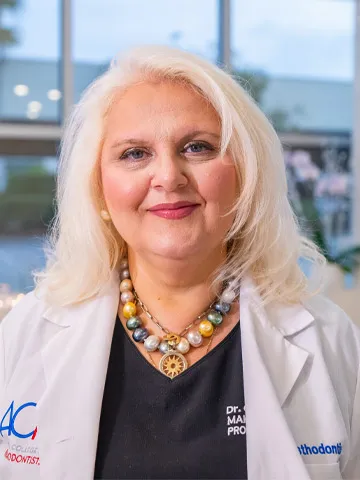
Makris Dental Prosthodontics is a specialty prosthodontic practice at 13250 Narcoossee Rd #103 in Lake Nona Medical City, Orlando. Dr. Elizabeta Cokovska is a board-certified prosthodontist with over 30 years in practice.
If your lower denture moves, start with the implant dentures page. If you are considering replacing teeth individually, start with dental implants. For costs, see how much do dentures cost and how much do dental implants cost.
Call (407) 753-4743 or request a consultation online. You will leave the first visit with a written assessment either way.
FAQs



Kind And Compassionate
Trusted by Our Patients