
Implant Dentistry
Is Full Mouth Reconstruction Worth It? What Happens, How Long It Takes, and Who Needs It

Contents
October 14, 2026

Full mouth reconstruction rarely starts as a plan. It starts as a pattern: a crown that cracks, a filling that has been redone three times, a tooth that is now shorter than the one beside it, a bite that no longer feels like it closes in the same place. Each problem gets fixed on its own, and the next one arrives anyway.
The short answer: Full mouth reconstruction rebuilds most or all of the teeth in both jaws through one coordinated plan, instead of repairing them one at a time. For people whose teeth are failing in several places at once, it is usually worth it: research links restoring severely worn teeth to measurable improvements in quality of life. For people whose wear is not yet causing problems, monitoring can be the better first step.

What Full Mouth Reconstruction Actually Is
It is not a single procedure. It is a plan that combines whichever treatments your mouth needs, sequenced so each one supports the next. Depending on the case, that can include crowns, bridges, dental implants, veneers, gum treatment, extractions and bite correction.
What makes it a reconstruction rather than a list of repairs is that the whole mouth is designed together, around a bite that works. That is the difference from a smile makeover, which focuses mainly on how the front teeth look.
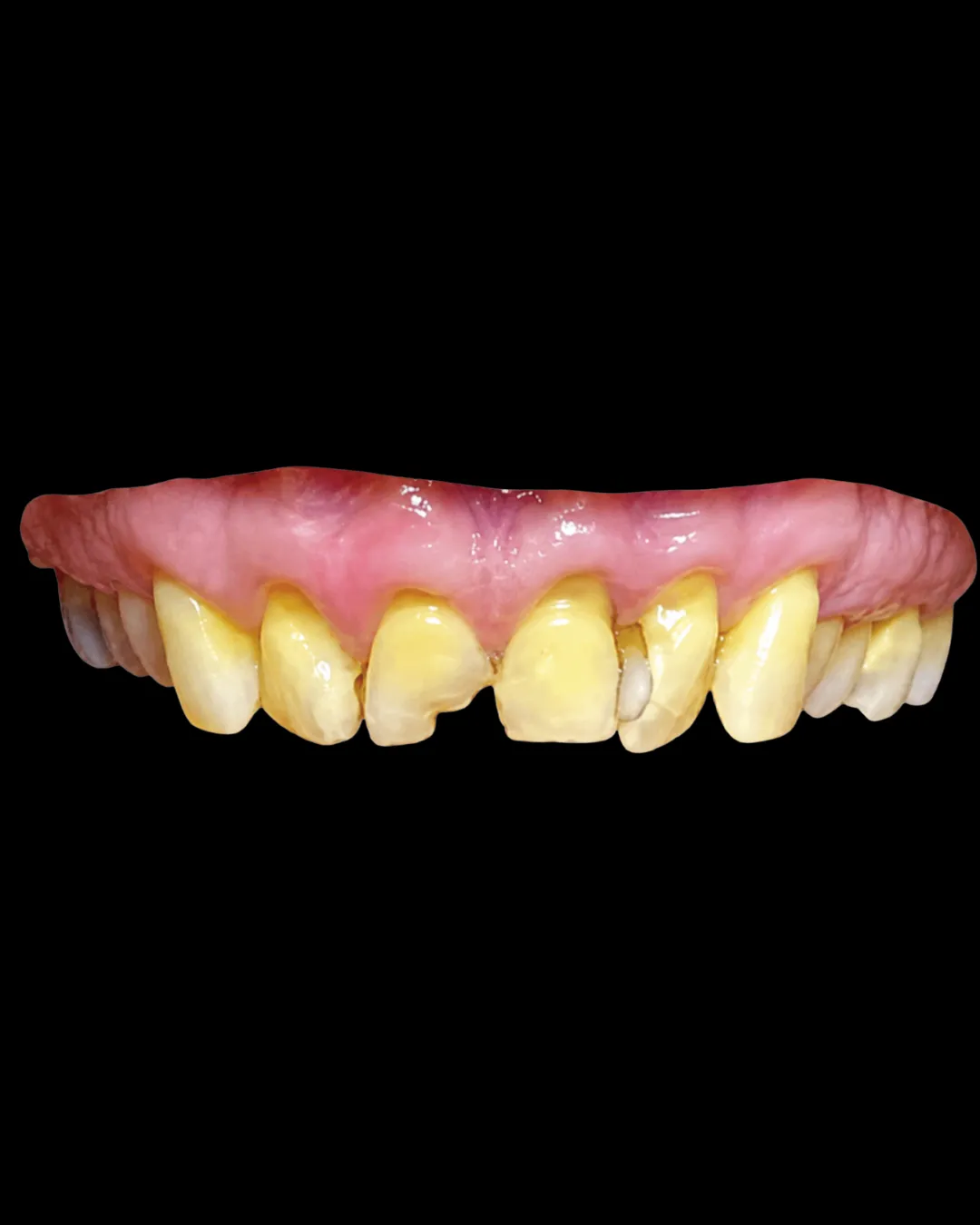
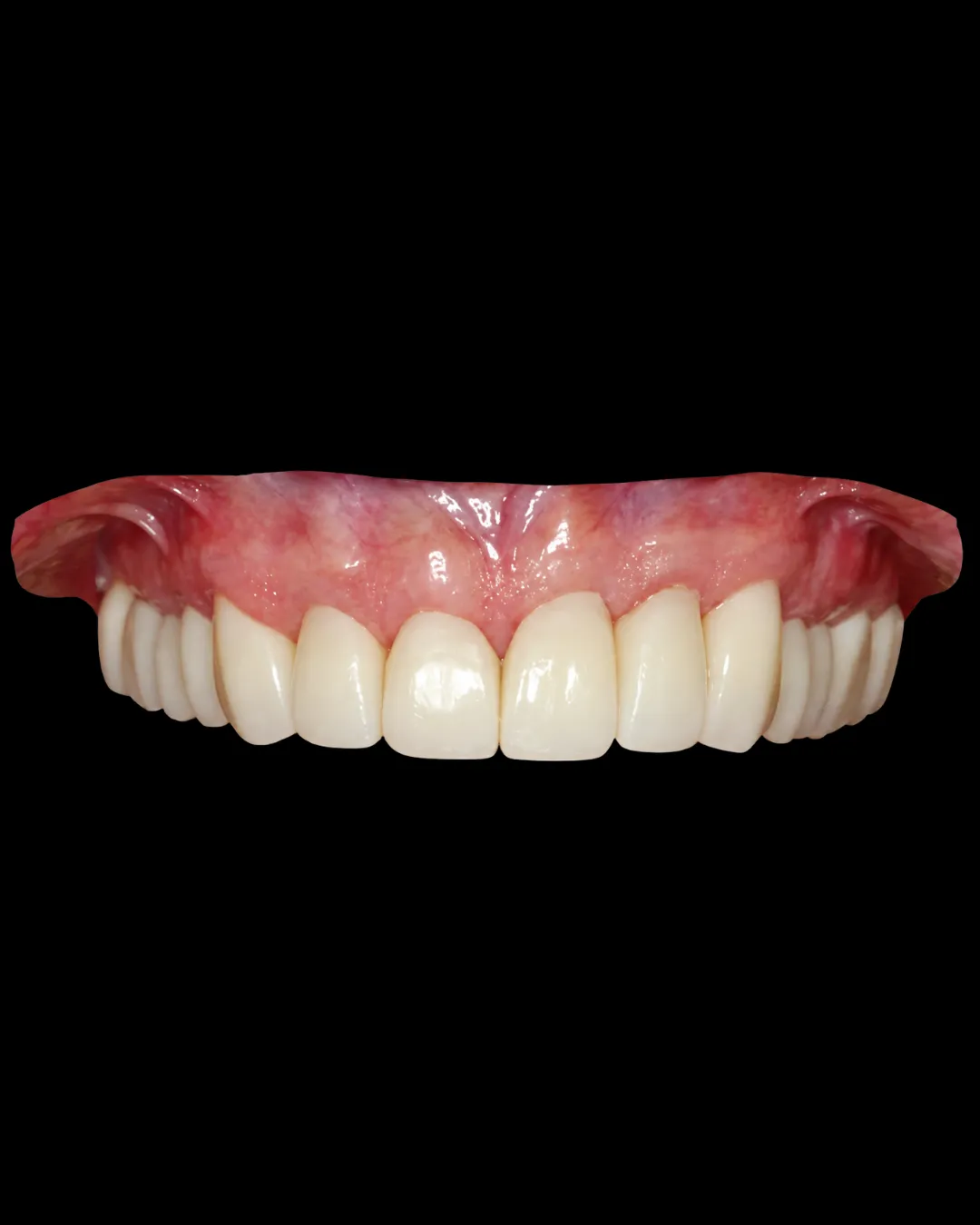
It also does not always mean implants. The case below was restored with crowns across the upper arch.
Signs It Might Be Time
- Several teeth are worn flat, chipped or noticeably shorter than they used to be
- Fillings and crowns keep failing, often in the same places
- Several teeth are missing, or a partial denture no longer works well
- Your bite feels uneven, or you have jaw pain or headaches linked to grinding
- You avoid certain foods, or avoid smiling in photos
One of these on its own rarely calls for a full reconstruction. Several together usually means the problem is not the individual teeth but how they work as a system.
What the Evidence Actually Says
Worn teeth are often treated as a cosmetic issue. The research suggests otherwise. A Dutch study comparing patient groups found that tooth wear impaired quality of life about as much as losing all of one's teeth (source).
Treatment helps. In a study of 124 patients with moderate to severe wear, those who chose a full restorative rehabilitation reported significant improvements in oral health-related quality of life and in how they felt about their appearance after one year (source).
The type of restoration matters too. A study following patients three months after different prosthodontic treatments found that those with fixed bridges, on teeth or on implants, reported better quality of life and chewing function than those with removable dentures (Peršić and Čelebić, 2015).
The Part Most Articles Leave Out
Not everyone with worn teeth needs reconstruction now. In the same 124-patient study, people without functional or appearance problems who chose counseling and monitoring instead of treatment did not get significantly worse over the year. The researchers concluded that monitoring may be appropriate for them. A practice that recommends rebuilding every worn mouth immediately is not following the evidence.
New restorations need looking after too. A systematic review of more than 14,000 crowns found that about 95% of metal-ceramic crowns were still in place after five years, with most modern all-ceramic crowns performing similarly (source). That is a good result, but it means some restorations will need repair or replacement over time, especially in people who grind. A reconstruction is only as durable as the bite it is built on and the night guard that protects it.
What Happens, Step by Step
- Examination and records. Teeth, gums, jaw joints and bite are examined, with photographs, a 3D scan and models of how your teeth meet.
- Diagnosis. The goal is to understand why the damage happened, whether grinding, acid, bite problems or failed past work, so the new restorations do not fail the same way.
- Design and preview. The new teeth are planned digitally, and the bite and appearance can often be tried out in temporary restorations before anything is made permanent.
- Foundation. Gum disease is treated, failing teeth are removed and implants are placed where needed.
- Final restorations. Crowns, bridges and implant teeth are made and fitted, usually in phases.
- Protection and maintenance. A night guard if you grind, and regular checkups to catch small problems early.
How Long It Takes
Timelines vary widely. A reconstruction on healthy teeth without implants may take a few months. One that involves extractions, bone grafting or implants commonly takes six months to a year or more, because implants need three to six months to bond with the bone before the final teeth go on. You should receive the full sequence in writing before treatment starts, so you know what happens when.
What It Costs
We do not publish a figure on this page, because two reconstructions can differ by tens of thousands of dollars depending on how many teeth are treated, whether implants or grafting are needed, and which materials are used. After your consultation you receive a written plan with the total broken down by phase, so you can see what is essential now and what can wait. Financing options are available, and phasing treatment over time is often possible.
What to Ask Any Practice
- What caused my teeth to break down, and how will the new plan prevent it happening again?
- Will I be able to try the new bite and appearance in temporaries before the final work is made?
- Who plans the case, who does any surgery, and who makes the final teeth?
- Which parts are essential now, and which could wait or be phased?
- What maintenance will this need over the next ten years?
- Would monitoring be a reasonable option for me instead?
Final Takeaways
- Full mouth reconstruction is a coordinated plan, not a single procedure, built around a bite that works.
- Tooth wear has been shown to affect quality of life about as much as losing all your teeth.
- Restorative rehabilitation of worn teeth significantly improved quality of life in a 124-patient study.
- People with wear but no functional or appearance problems may do well with monitoring instead.
- About 95% of crowns survive five years; maintenance and a night guard protect the rest.
- Plans with implants commonly take six months to a year or more.
- The most important question is why the damage happened, because that decides whether the new work lasts.
Research References
- Oral health-related quality of life in patients with tooth wear. J Oral Rehabil. 2013;40(3):185–190. doi
- The influence of management of tooth wear on oral health-related quality of life. Clin Oral Investig. 2018;22(7):2567–2573. PMC
- Peršić S, Čelebić A. Influence of different prosthodontic rehabilitation options on oral health-related quality of life, orofacial esthetics and chewing function based on patient-reported outcomes. Qual Life Res. 2015.
- Sailer I, Makarov NA, Thoma DS, Zwahlen M, Pjetursson BE. All-ceramic or metal-ceramic tooth-supported fixed dental prostheses (FDPs)? A systematic review of the survival and complication rates. Part I: Single crowns (SCs). Dent Mater. 2015;31(6):603–623. doi
Where to Go From Here
Makris Dental Prosthodontics is a specialty prosthodontic practice at 13250 Narcoossee Rd #103 in Lake Nona Medical City, Orlando. Dr. Elizabeta Cokovska is a board-certified prosthodontist with over 30 years in practice, and crowns, bridges and implant teeth are made in our own laboratory.
Start with full mouth reconstruction for how we approach these cases, or see before and after results. If your teeth are worn but not yet causing problems, worn teeth solutions explains the options, including monitoring.
Call (407) 753-4743 or request a consultation online. You will leave the first visit with a written assessment either way.
FAQs



Kind And Compassionate

Trusted by Our Patients